Seattle’s $22.14 Minimum Wage Is Coming, and Some Businesses Fear the Impact

Seattle workers are getting another raise, but not everyone is celebrating. Beginning in January 2027, the city’s minimum wage will climb to $22.14 an hour, offering employees additional income as everyday expenses remain high. For restaurant owners, shopkeepers, and other small employers, the increase means another adjustment to already tight budgets. The debate isn’t simply about whether workers deserve higher pay. It’s about how businesses can afford those wages while keeping prices reasonable and their doors open. And Seattle has been navigating this balancing act for years.
Seattle’s Minimum Wage Has Come a Long Way
Seattle became a national leader in minimum wage policy when city officials approved a gradual increase toward $15 an hour in 2014. The ordinance began taking effect the following year, giving businesses time to adjust. After reaching the original target, annual inflation adjustments continued pushing the required wage upward. The goal was straightforward: prevent workers from losing purchasing power as living costs increased. What started as a groundbreaking $15 policy has now moved well beyond that figure. The latest adjustment shows how much Seattle’s wage requirements have changed.
The New Minimum Wage Takes Effect January 1

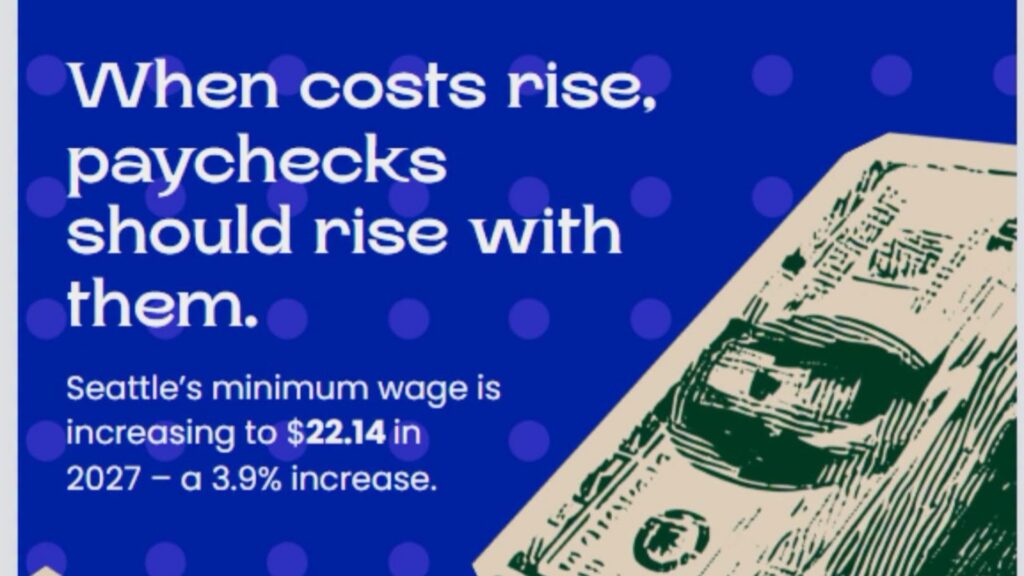
Seattle’s Office of Labor Standards announced that the minimum wage will increase from $21.30 to $22.14 per hour on January 1, 2027. That’s an additional 84 cents hourly, representing an increase of approximately 3.9%. The adjustment follows a regional inflation measure, meaning the change comes from an established formula rather than a new political agreement. Employers must prepare their payroll systems before the deadline. Although the increase might appear modest on an individual paycheck, its financial significance becomes clearer when applied across an entire workforce.
The Rule Applies to Businesses of Every Size

One important detail is that Seattle’s new minimum wage applies to employers regardless of how many workers they have. Smaller businesses previously operated under different wage requirements, but that distinction ended in 2025. Employers also cannot count customer tips or medical benefits toward the required hourly minimum. That means a neighborhood café must meet the same basic wage standard as a large restaurant chain. However, businesses have different resources available to absorb higher expenses. For independent owners, even small increases can create difficult financial decisions.
Here’s What the Increase Means for Payroll

Consider a restaurant employing 10 minimum wage workers, each working 40 hours weekly. The additional 84 cents per hour would increase annual wages by approximately $17,472, assuming everyone works throughout the year. That calculation excludes additional payroll taxes and related employment expenses. Larger businesses may have greater flexibility to absorb those costs, while smaller establishments often operate with limited profit margins. Owners must decide whether to adjust prices, improve efficiency, or accept lower earnings. Those choices explain why some Seattle businesses are worried about the approaching deadline.
Some Restaurant Owners Are Already Feeling Pressure

Magnolia Village Pub owner David Baus has described the financial challenges facing his Seattle business. During a February interview, he said labor expenses had reached approximately 42% of revenue, higher than the 35% level he considered appropriate. He also reported that the pub’s burger price had increased from $16 to $23 since he purchased the establishment in 2022. Those changes cannot necessarily be attributed entirely to minimum wage increases, since restaurants face other rising expenses. Still, his experience illustrates why another payroll adjustment can feel intimidating.
For Workers, the Raise Can Make a Difference

A minimum wage employee working 40 hours weekly would earn approximately $33.60 more each week under the new rate. Over a full year, that amounts to roughly $1,747 before taxes, assuming consistent working hours. For someone managing grocery bills, transportation costs, and housing expenses, the additional income can be meaningful. Supporters argue that inflation-based increases help wages keep pace with rising prices. However, higher hourly pay doesn’t automatically guarantee financial stability, especially when essential expenses remain expensive. That’s why the effects extend beyond individual paychecks.
Customers Might Notice Changes at Local Businesses

Businesses facing higher payroll costs have several options, although none works equally well for everyone. Restaurants might increase menu prices, shorten operating hours, improve productivity, or reduce other expenses. Some employers may absorb the increase through smaller profits. Others could reconsider hiring plans if customer demand remains weak. Importantly, higher minimum wages don’t automatically produce layoffs or price increases everywhere. Individual results depend on business conditions and management decisions. For customers, any adjustments may appear gradually through everyday shopping and dining experiences.
Seattle’s Wage Is Higher Than Washington’s Minimum

Seattle’s upcoming $22.14 hourly wage exceeds Washington state’s 2027 minimum of $17.73 by $4.41. That difference matters for businesses operating near city boundaries, where wage requirements can vary depending on location. A restaurant inside Seattle must follow the city’s higher standard, while one outside may face different rules. Employees might benefit from seeking work in higher-paying areas, but businesses must consider competition from nearby establishments. These regional differences add another layer to the conversation about wages, affordability, and maintaining successful neighborhood businesses.
What Happens After January Will Matter Most

Seattle employers have until January 1, 2027, to prepare for the new wage requirement. The city’s Office of Labor Standards will provide updated workplace information to help businesses understand their obligations. After implementation, attention will turn toward restaurant prices, staffing levels, business activity, and workers’ purchasing power. Those developments will help reveal how employers and employees adapt. Seattle’s experience could also influence conversations in other cities considering higher minimum wages. For now, workers can anticipate bigger paychecks while business owners calculate what the coming year will require.