Middle-Class Wealth Slashed After Federal Data Tracks Lowest Income Share Since 1947


For years, Americans have heard that the economy is expanding, unemployment remains relatively low, and corporate profits are strong. Yet many middle-class households say it has become harder to get ahead. New federal data offers one explanation: workers are now receiving the smallest share of the nation’s economic output since the government began tracking the measure in 1947, suggesting a growing disconnect between overall economic growth and what many families actually take home.
A Historic Shift in Where Income Goes

The measure at the center of the discussion is known as labor’s share of income, which tracks how much of national economic output flows to workers through wages and salaries instead of to investors through corporate profits, dividends, and other returns on capital. According to research from the Federal Reserve Bank of New York cited by CBS News, workers received just 54.1% of national income in early 2026, down from nearly 65% after World War II and below the roughly 57.7% recorded at the beginning of 2020.
Why Many Americans Feel Worse Off

The decline in labor’s share helps explain why public confidence in the economy remains weak even as many traditional economic indicators appear healthy. A recent Federal Reserve Bank of New York survey found nearly half of Americans said their financial situation was worse than a year earlier, while a CBS News poll reported that three-quarters of respondents felt their incomes were not keeping pace with inflation. Economists say these experiences reinforce the perception that economic gains are reaching many households more slowly than headline statistics suggest.
Has the Middle Class Really Been Hollowed Out?
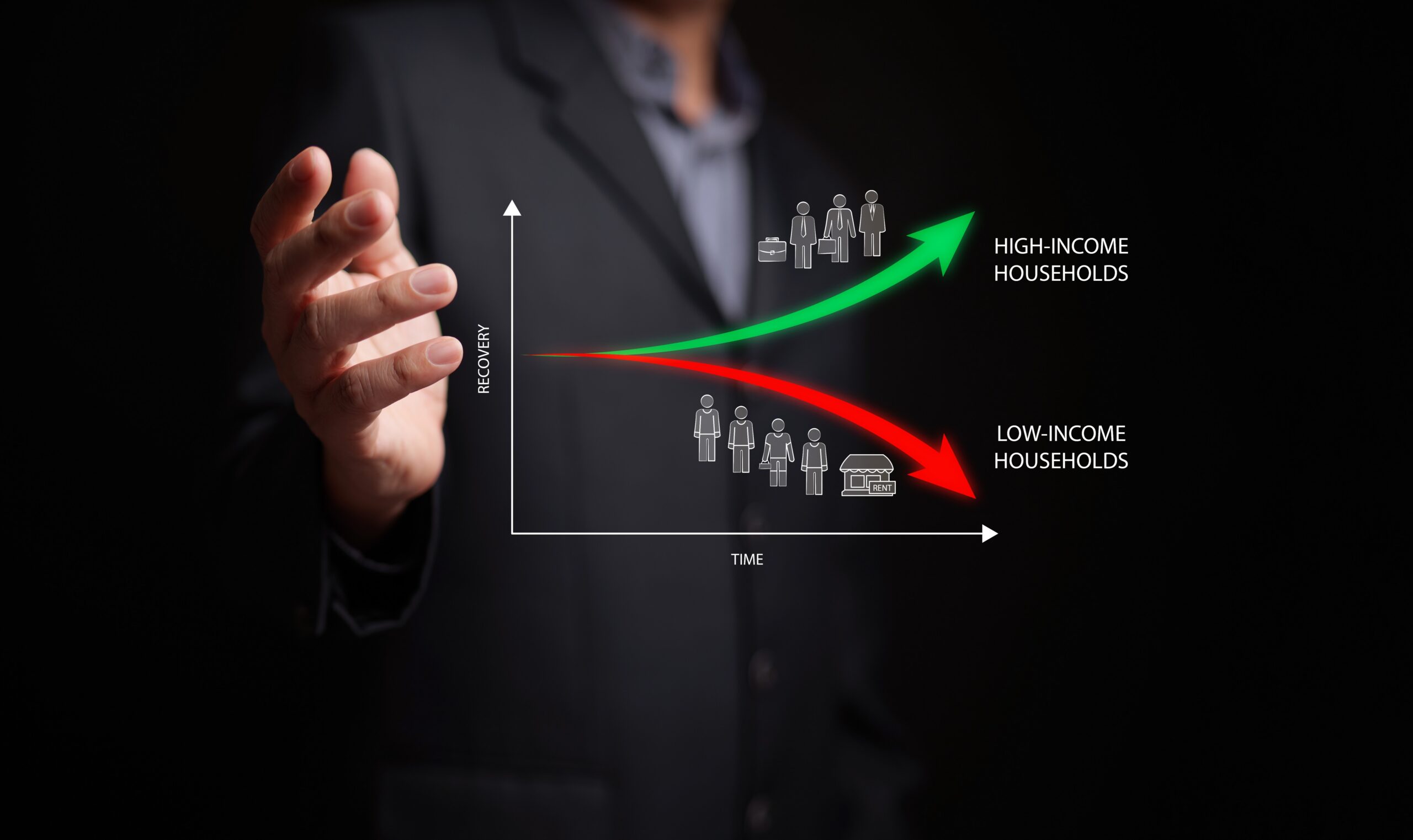
Not everyone agrees that the middle class is disappearing. A report from the American Enterprise Institute argues that the shrinking share of middle-class households reflects upward mobility more than widespread decline. Using an absolute income definition rather than one tied to the median, the researchers found that the core middle class shrank from 36% of families in 1979 to 31% in 2024 largely because many households moved into the upper-middle-income category, whose share nearly tripled over the same period.
The Debate Depends on How ‘Middle Class’ Is Defined

Researchers measure the middle class in different ways, leading to different conclusions. The Pew Research Center defines middle-class households as those earning between two-thirds and twice their state’s median household income, a framework also used in a recent GOBankingRates analysis based on Census Bureau data. Under that definition, the income range varies widely across the country because housing costs, wages, and local economies differ from state to state. Massachusetts has the nation’s highest middle-class income range, while Mississippi has the lowest.
Where the Income Thresholds Are Highest
The state-by-state analysis illustrates how dramatically geography affects what it means to be middle class. In Massachusetts, households earning roughly $69,885 to $209,656 qualify as middle class, while California’s range extends from about $66,766 to $200,298. In contrast, Mississippi’s middle-class range runs from approximately $39,418 to $118,254. These differences reflect varying median household incomes rather than a single national standard.
Why Workers’ Share Has Been Falling
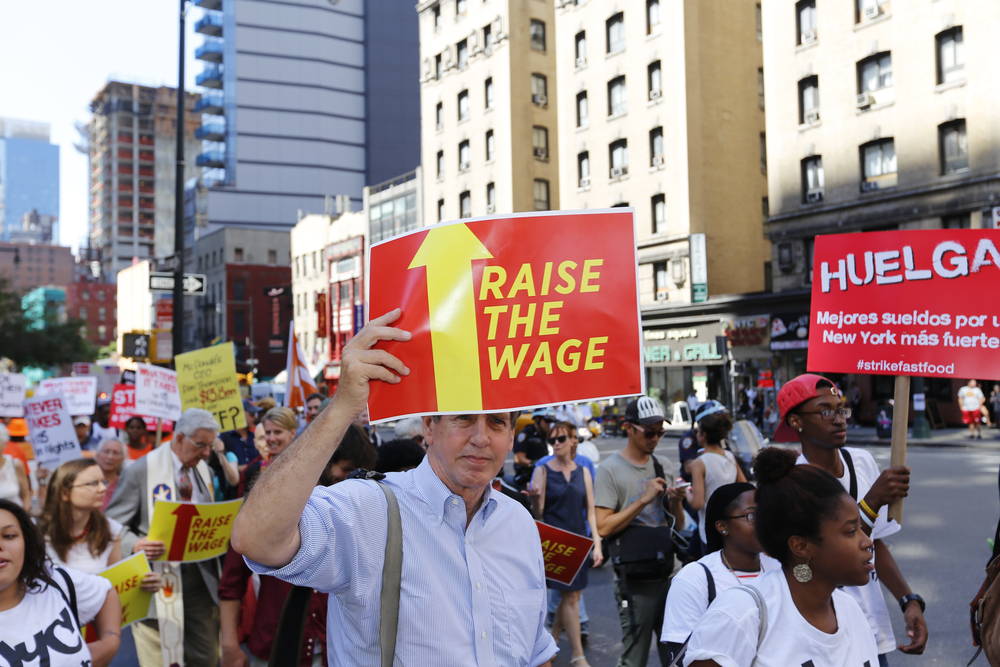
Economists point to several long-term forces behind the declining labor share of income. Among the factors frequently cited are weaker union membership, policy changes that increased the returns to capital, globalization, technological change, and slower wage growth relative to corporate profits. As businesses generate higher earnings, a larger portion of economic gains has flowed to shareholders and executives instead of employee paychecks, according to economists quoted by CBS News.
The Consequences Reach Beyond Paychecks

A smaller share of national income flowing to workers can affect more than wages alone. Economists say it influences families’ ability to build savings, buy homes, absorb rising living costs, and prepare for retirement. Higher borrowing costs, elevated credit card debt, persistent inflation, and concerns about job security have compounded these pressures, leaving many households feeling financially strained even during periods of broader economic expansion.
Evidence Supports More Than One Story

The differing research highlights how complex the middle-class debate has become. The Federal Reserve and labor economists emphasize workers’ declining share of national income as evidence that many households are losing ground relative to economic growth. Meanwhile, the American Enterprise Institute argues that while inequality remains an important issue, much of the middle class’s numerical decline reflects households moving into higher income brackets rather than widespread downward mobility. Both perspectives rely on different definitions and measurements, illustrating how the same economy can produce contrasting conclusions.
The Bigger Question Is Whether Growth Reaches Workers
As policymakers continue debating taxes, wages, housing affordability, and economic opportunity, the discussion increasingly centers on who benefits from economic growth rather than whether growth exists at all. Whether the middle class is shrinking because families are moving up or because workers are receiving a smaller share of the nation’s prosperity, the underlying challenge remains the same: ensuring that future gains translate into stronger financial security for households across the income spectrum.