A Mysterious Tentacled Object Spotted On The ISS Sparks Panic, Yet NASA Says the 2026 Discovery Is Actually a Breakthrough for ‘The Martian’
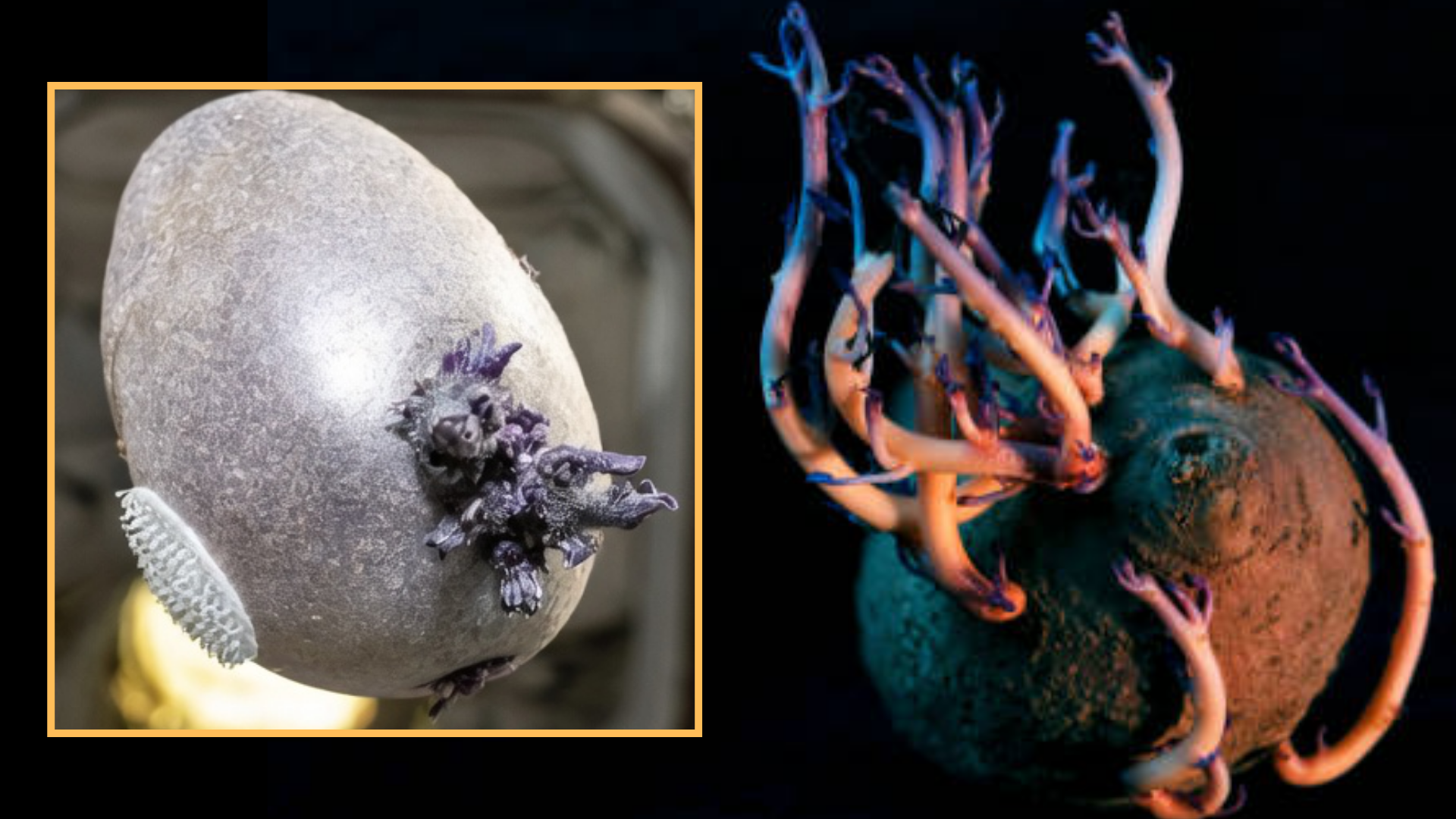

When a NASA astronaut posted a photo of what appeared to be a dark, tentacled egg-like object erupting from a surface aboard the International Space Station, the internet did not respond calmly. “Kill it with fire!!!” one user wrote on X. Another said they genuinely believed something was hatching. A third compared it to a creature from a 2017 science fiction horror film. The object was, in fact, a potato and the story behind it is more interesting than the panic it caused.
The photo was taken by veteran NASA astronaut Don Pettit during Expedition 72, which ran from September 2024 through April 2025. Pettit has a long history of conducting informal science experiments during his off-duty hours aboard the station, and this was no exception. He had brought potatoes with him specifically to grow in a makeshift terrarium fitted with a hook-and-loop anchor system and an improvised grow light. What he captured on camera was an early purple potato, its roots spreading outward in every direction in the absence of gravity.
Pettit named his experiment “Spudnik-1” — a nod to the Soviet satellite and a signal that he was not taking himself too seriously. But underneath the humor was a genuine scientific motivation, one tied directly to the future of long-duration human spaceflight. The potato, it turns out, is not just a punchline aboard the ISS. It may be one of the most important crops humanity takes with it when it eventually heads to Mars, and Pettit wanted to start figuring out how to grow one while he still had the chance.
Why a Potato in Space Is Actually a Serious Scientific Statement
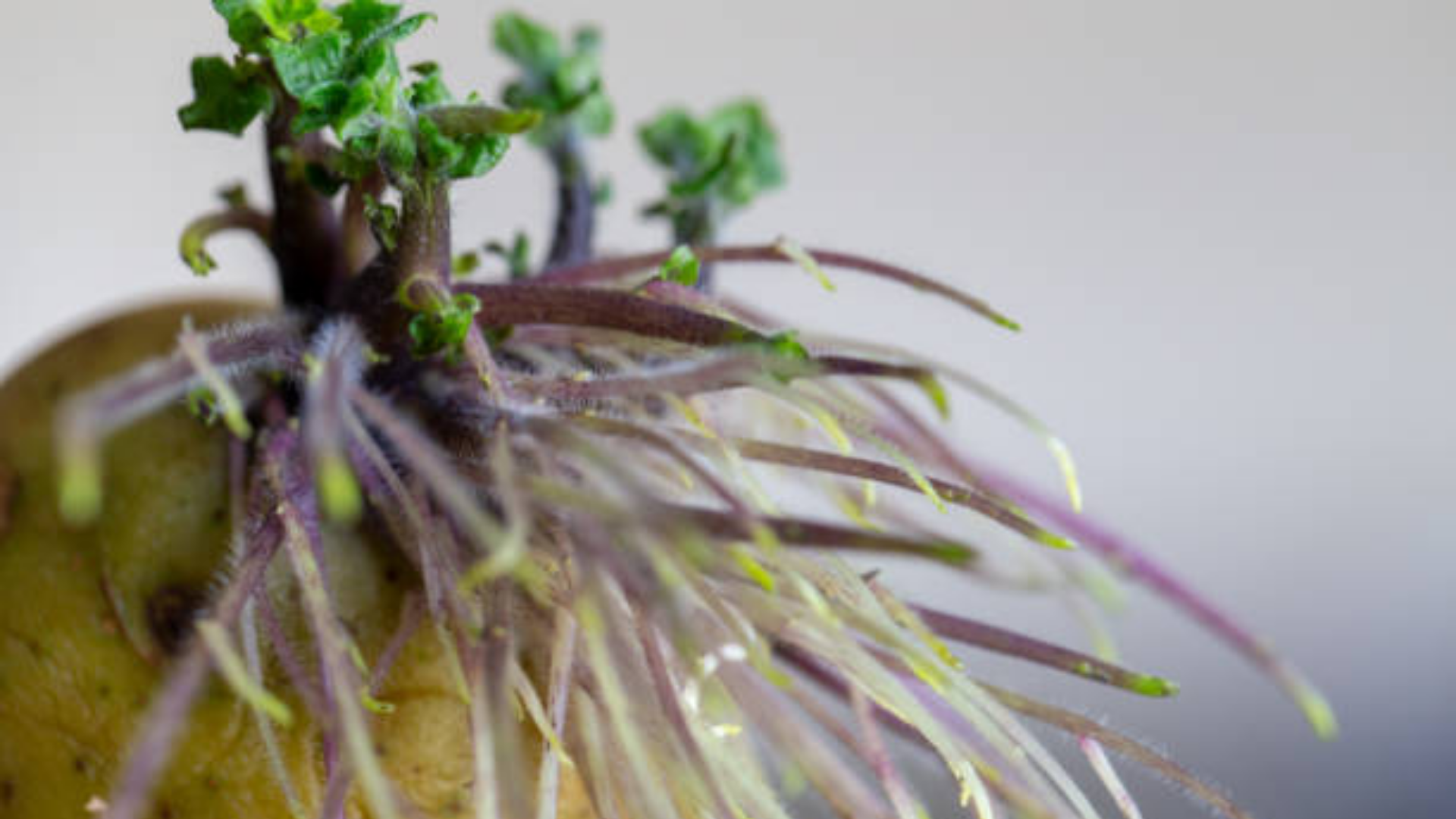
Pettit was deliberate in explaining why he chose the potato over any other plant. In his post on X, he described potatoes as among the most efficient plants in existence when measured by edible nutrition relative to total plant mass, roots included. That efficiency metric matters enormously in a spacecraft or planetary habitat where every gram of food, water, and growing medium must be launched from Earth at extraordinary cost. A plant that produces more food per unit of space and resources is not a novelty. It is a survival tool.
He also cited a cultural touchstone that resonated immediately with his online audience. “Recognized by Andy Weir in his book and movie ‘The Martian,'” Pettit wrote, “potatoes will have a place in future exploration of space.” In that story, a stranded astronaut keeps himself alive for months by farming potatoes in Martian soil. Weir’s choice of crop was not arbitrary. It was grounded in the same nutritional efficiency logic Pettit described. The fact that a working NASA astronaut is now referencing that fictional scenario as a model for real planning says something about where space agriculture is heading.
Growing the potato in microgravity also produced findings worth noting. When a fan asked Pettit how the space-grown potato compared to one grown on Earth, he responded that roots in zero gravity spread outward in all directions rather than downward, and that every plant he had ever grown aboard the station grew considerably slower than it would have on Earth. Those two observations — undirected root growth and reduced growth rate are precisely the kinds of variables researchers need to understand before designing agricultural systems for a Mars mission that could last years.
Spudnik-1 and the Broader Garden Already Blooming Aboard the Station
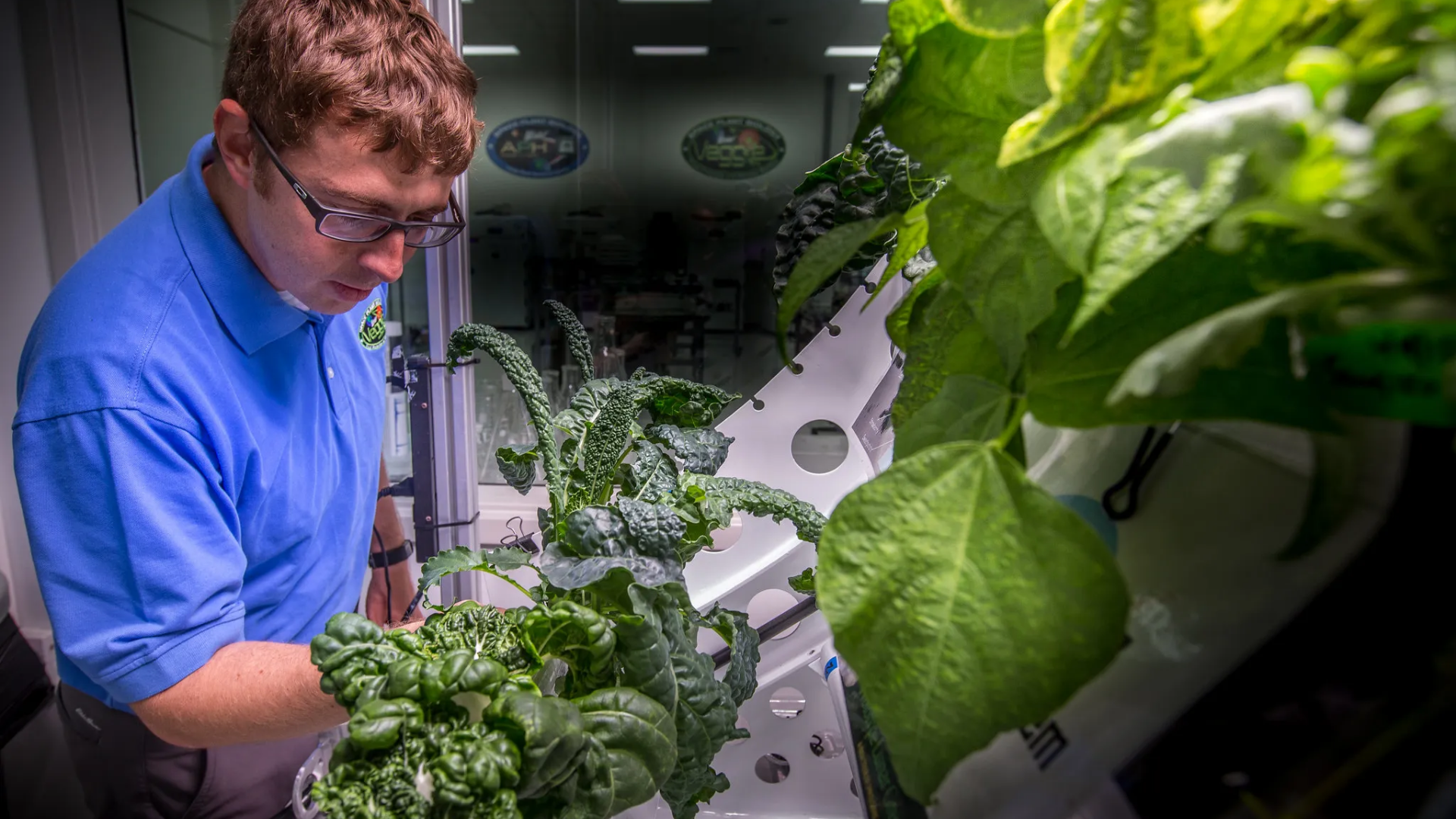
Pettit’s potato experiment did not happen in isolation. Astronauts have been cultivating plants aboard the ISS for years, and the program has expanded steadily in both scope and ambition. To date, crew members have grown a wide range of fruits, vegetables, and flowers in orbit, using the station’s controlled environment as a living laboratory for understanding how plants behave without gravity, with limited light, and under the unique radiation conditions of low Earth orbit.
NASA has outlined plans to push that program further. Scientists at Kennedy Space Center have identified tomatoes and peppers as near-term candidates for expanded cultivation aboard the station. Beyond simple nutrition, researchers are also eyeing crops for their protective properties. Berries, certain beans, and other antioxidant-rich foods are being studied not just as food sources but as potential buffers against the elevated space radiation that crew members are exposed to on long missions, a health consideration that becomes more pressing the farther from Earth astronauts travel.
The response to Pettit’s post reflected genuine public interest in what is growing aboard the station. His Spudnik-1 photo accumulated nearly 100,000 views, and the comments ranged from jokes about zero-gravity deep fryers to questions about fertilizer; a callback to The Martian that Pettit’s audience was clearly ready to make. One user suggested someone needed to invent a weightless fryer “as soon as possible.” Another appreciated the Velcro anchoring system. The engagement pointed to something real: people are paying attention to space food in a way they perhaps were not before.
From a Makeshift Terrarium to Mars: What Spudnik-1 Actually Represents

It would be easy to file Pettit’s potato experiment under “charming astronaut hobby” and move on. But the longer view suggests it belongs in a different category. Sustained human presence beyond Earth, on the Moon, on Mars, or aboard deep-space vehicles will require crews to grow a meaningful portion of their own food. The logistics of resupplying a Mars mission from Earth are, at current technology levels, effectively impossible for anything beyond the initial journey. What astronauts eat on Mars will largely have to come from Mars.
That reality makes every informal experiment Pettit conducts in his off-hours more consequential than it might appear. Understanding how a potato anchors itself without gravity, how slowly it grows under artificial light, and how its root system navigates a three-dimensional environment without a downward pull. These are data points that feed into the engineering of future habitat food systems. The terrarium on Expedition 72 is a rough prototype for something that will eventually need to function reliably on another planet, under far more demanding conditions.
Pettit closed his original post with a line that reads less like a caption and more like a quiet declaration of intent: “So I thought it good to get started now.” In that sentence is the entire logic of why a potato on the ISS matters. The distance between a Velcroed purple potato growing sideways in a space station terrarium and a functional agricultural system on Mars is vast; measured in decades of research, engineering, and human risk. But every journey across that distance begins with someone deciding not to wait any longer.